
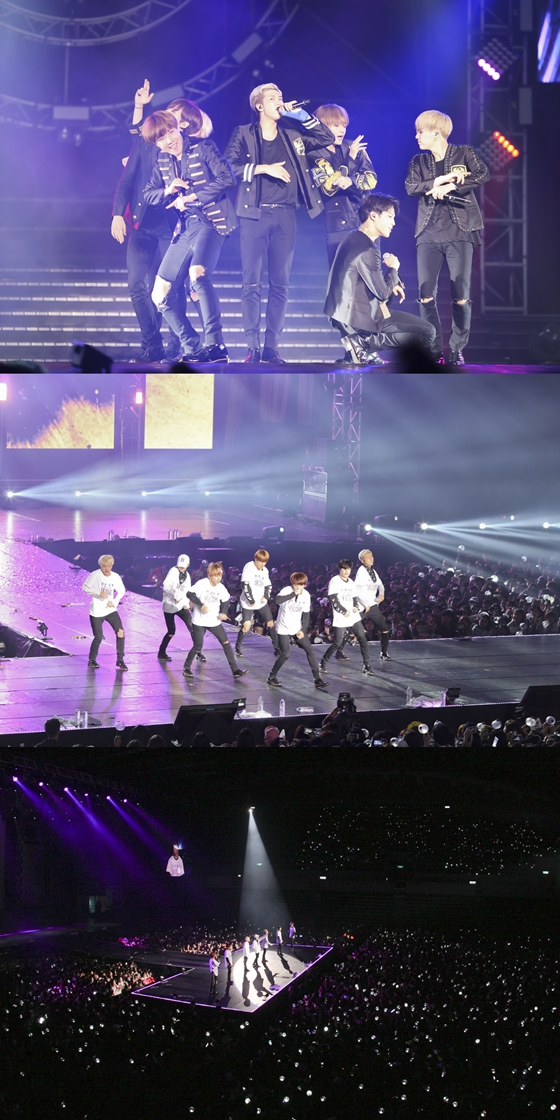
# The DAY6 Concert That Sparked an Online War: When K-pop Fan Culture Clashes With Local Rules
**What started as a routine K-pop concert in Kuala Lumpur ended up exposing deep fractures in global fan culture. The January 31, 2026 DAY6 show at Axiata Arena became ground zero for an online battle between Southeast Asian and Korean netizens—one that revealed uncomfortable truths about respect, entitlement, and the growing pains of K-pop’s international expansion.**
## The Incident That Started It All
On January 31, 2026, JYP Entertainment’s band DAY6 performed at Kuala Lumpur’s Axiata Arena as part of their **”Right Through Me” world tour**. The venue had clear rules: **no professional camera equipment allowed**, a standard policy designed to prevent obstruction of views and protect artist copyrights.
But one Korean “fansite master” (a fan who runs dedicated photo/video accounts for specific idols) allegedly **smuggled professional DSLR camera equipment** into the arena, violating venue regulations.
Malaysian fans noticed. They confronted the fansite master. Security got involved. And what should have been a simple enforcement of rules spiraled into an international incident.
## What Is a Fansite Master?
For those unfamiliar with K-pop fan culture, “fansite masters” are:
– **Superfans** who invest thousands in professional camera gear
– Create **high-quality photos/videos** of their bias (favorite member)
– Often **sell photobooks and merchandise** to other fans
– Some make substantial income from their fansite operations
– Considered **semi-professional** in the K-pop ecosystem
In Korea, fansite masters occupy a gray area—tolerated by agencies because they provide free promotion, but technically operating in legal ambiguity regarding copyright and venue rules.
## How Malaysian Fans Responded
Malaysian and broader Southeast Asian fans were furious. Their complaints centered on several key points:
**Rule-breaking:**
> *”We followed the rules. We left our good cameras at home. And they just smuggle theirs in? That’s not fair.”*
**View obstruction:**
The professional camera with its large lens blocked views for fans seated behind, ruining their concert experience.
**Double standards:**
Korean fans have historically criticized international fans for various behaviors, but when they break rules, they expect leniency.
**Entitlement:**
The assumption that Korean fans somehow have more “rights” at K-pop concerts, even when held in other countries.
## The Social Media Explosion
What could have been a localized dispute became a **full-scale online war** across Twitter, Instagram, TikTok, and Korean platforms like DC Inside and Nate Pann.
**#SEABlings** (Southeast Asian K-pop fans) united:
– Malaysian, Indonesian, Thai, Filipino, Vietnamese, and Singaporean fans formed a coalition
– Created memes mocking Korean fans’ entitlement
– Shared stories of similar incidents at other K-pop concerts
– Demanded accountability from Korean fan culture
**Korean netizens fired back:**
– Accused Southeast Asian fans of “attacking” Korean culture
– Claimed the fansite master was “just doing their job”
– Some made **racist comments** about Southeast Asians
– Argued that “real fans” should understand fansite culture
## The Racism Problem
As the dispute escalated, it exposed ugly undercurrents of racism on both sides:
**Korean netizens:**
– Called Southeast Asian fans “poor” and unable to afford real cameras
– Used derogatory terms about Southeast Asian countries
– Suggested Southeast Asians “don’t understand K-pop properly”
– Implied Korean fans are “superior” because K-pop is Korean
**Some Southeast Asian responses:**
– Generalized all Korean fans as entitled and rude
– Made counter-stereotypes about Korean behavior
– Called for boycotts of Korean products (which hurt innocent businesses)
The racism overshadowed the legitimate grievance about rule-breaking, turning a valid complaint into a toxic mess.
## DAY6 and JYP’s Silence
Notably, neither DAY6 members nor JYP Entertainment issued any statement about the controversy. This silence frustrated fans on all sides:
**Why agencies stay quiet:**
– Don’t want to alienate any fanbase
– Fansite masters generate valuable free content
– Fear backlash regardless of what they say
– Legal gray areas make official statements risky
**Why this matters:**
Agency silence enables bad behavior. Without clear boundaries, fansite culture will continue causing problems at international events.
## The Bigger Picture: K-pop’s Global Growing Pains
The DAY6 Malaysia incident is just one symptom of a larger issue: **K-pop’s explosive global growth has outpaced the cultural adaptation of its fan ecosystems**.
**The core tensions:**
1. **Korean fan culture vs. international norms**
– Korean concert culture developed over decades with unwritten rules
– International fans come from different concert cultures
– Neither side fully understands or respects the other’s expectations
2. **Fansite economy vs. venue rules**
– Fansite masters depend on photos for income/status
– International venues have strict equipment policies
– No standardized global policy exists
3. **Language barriers**
– Miscommunications escalate quickly online
– Nuance is lost in translation
– Bad actors deliberately mistranslate to inflame tensions
4. **Race and power dynamics**
– K-pop is Korean, but fans are global
– Some Korean fans feel ownership over “their” culture
– International fans feel marginalized despite being majority of fandom
## What Other Incidents Have Happened?
The Malaysia concert isn’t isolated. Similar conflicts have erupted at:
**BLACKPINK Bangkok (2024):**
– Korean fansite masters allegedly pushed Thai fans out of barricade spots
– Security had to intervene multiple times
**BTS London (2023):**
– Korean fans camped overnight despite venue prohibitions
– Local residents complained; UK fans felt disrespected
**SEVENTEEN Jakarta (2025):**
– Fansite masters used ladders inside venue (safety violation)
– Indonesian fans reported to venue management
**Pattern:** Korean fansite masters breaking local rules → international fans complaining → online war → agency silence → nothing changes.
## Proposed Solutions (From Fans and Industry Observers)
**1. Standardized International Fan Conduct Guidelines**
– JYP, HYBE, SM, YG collaborate on unified rules
– Translated into major languages
– Enforced at all official events globally
**2. Official Fansite Registration System**
– Agencies officially register approved fansites
– Registered fansites get designated press areas (separate from general fans)
– Unregistered fansites subject to same rules as all fans
**3. Venue-Agency Collaboration**
– Agencies brief venues on K-pop fan culture specifics
– Venues provide clear rules in advance (Korean + local language)
– Security trained to handle fan culture conflicts
**4. Artist Statements**
– Idols occasionally remind fans to follow local rules
– Make it clear: “Respecting local fans = respecting us”
**5. Community Self-Policing**
– Fan groups (Korean and international) establish codes of conduct
– Call out bad behavior within own communities
– Create positive examples of cross-cultural fan interactions
## The Role of Agencies
K-pop agencies have largely ignored these conflicts, but they **have a responsibility** here:
**What agencies should do:**
– **Acknowledge the problem** publicly
– **Set clear boundaries** for fansite culture
– **Support international fans** feeling marginalized
– **Educate Korean fans** about respecting local rules abroad
– **Provide official content** to reduce fansite dependence
**Why they don’t:**
Agencies benefit from the current system. Fansites provide free promotion, drive album sales through photocard culture, and create aspirational content. Changing the system could hurt their bottom line.
## What Fans Can Do
Whether you’re Korean, Southeast Asian, or from anywhere else, here’s how to make K-pop fan culture better:
**1. Follow venue rules—always**
If you’re told no professional cameras, don’t bring one. Period.
**2. Respect local fans’ experiences**
They deserve to enjoy concerts in their own countries without obstruction.
**3. Don’t generalize entire nationalities**
One entitled fan doesn’t represent all Korean fans. One complaining fan doesn’t represent all Malaysian fans.
**4. Call out racism immediately**
In your own language, in your own community. Don’t let it slide.
**5. Support official channels**
Buy official photos/videos when available. Reduce dependence on fansite content.
**6. Communicate respectfully**
Even when angry, avoid stereotypes and slurs. Focus on specific behaviors, not nationalities.
## The Long-Term Stakes
If these conflicts continue unchecked, the consequences could be severe:
**For K-pop:**
– Growing resentment toward Korean culture among international fans
– Venues becoming reluctant to host K-pop events
– Government regulations restricting K-pop concerts
– Fan communities fracturing along national lines
**For artists:**
– Caught in the middle of fan wars
– Uncomfortable performing in hostile environments
– Pressure to “pick sides” between fanbases
**For the industry:**
– Reduced international expansion opportunities
– Negative perception of K-pop fan culture globally
– Economic losses from boycotts and reduced engagement
## A Path Forward
The DAY6 Malaysia controversy should be a wake-up call. K-pop has become a **global phenomenon**, which means **global responsibility**.
**Key principles:**
– **Rules apply equally** to all fans, regardless of nationality
– **Respect local cultures** when K-pop events happen abroad
– **Racism has no place** in fandom, ever
– **Agencies must lead** in setting boundaries
K-pop’s greatest strength is its ability to unite people across borders. But that strength is threatened when entitlement, rule-breaking, and racism divide communities.
## Final Thoughts: Respect Is Universal
Whether you’re attending a concert in Seoul, Kuala Lumpur, London, or Los Angeles, one principle remains constant: **respect**.
Respect venue rules. Respect local fans. Respect other cultures. Respect the artists who bring us together.
The DAY6 Malaysia incident wasn’t really about a camera. It was about whether K-pop’s global community can mature beyond nationalism and entitlement.
**The answer should be yes. The question is: will we?**
—
**🔗 Related:**
– [K-pop Fan Culture: The Good, The Bad, and The Controversial](https://ko2u.com/k-pop-fan-culture-guide/)
– [How to Be a Respectful K-pop Fan at International Concerts](https://ko2u.com/k-pop-concert-etiquette/)
**💌 Want more K-pop insights delivered to your inbox?** [Subscribe to our newsletter](https://ko2u.com/newsletter/) for exclusive analysis, trend breakdowns, and the stories behind your favorite idols.