
South Korea has emerged as a global technology powerhouse in 2026, with groundbreaking innovations that are reshaping industries worldwide. From artificial intelligence to industrial automation, Korean tech trends 2026 are setting new benchmarks for innovation and competitiveness. This year’s Consumer Electronics Show (CES) highlighted Korea’s technological evolution, showcasing how the nation is transitioning from consumer electronics to enterprise-grade B2B solutions.

Agentic AI and Physical AI Revolution
The most significant Korean tech trend in 2026 is the rise of agentic AI—autonomous systems capable of independent reasoning and decision-making. Unlike traditional generative AI models, these advanced systems can take action without human intervention, making them ideal for industrial applications. Physical AI, which operates robotics and autonomous vehicles, represents Korea’s commitment to embedding intelligence into real-world manufacturing and logistics environments.
At CES 2026, Korea’s record-breaking 470-company pavilion demonstrated this shift, with 21% of exhibitors focused on AI-related technologies. This concentration of AI innovation reflects a national strategy to become one of the top three global AI powerhouses, supported by government investments exceeding $349 million in AI-driven industrial transformation.
Korean AI Chips Leading Edge Computing
Korean-designed AI chips are redefining edge computing capabilities in 2026. These small, efficient, and powerful processors enable real-time processing at the device level, reducing latency and improving performance for applications ranging from autonomous vehicles to smart factories. Major Korean semiconductor companies have invested heavily in developing specialized AI accelerators optimized for inference tasks, positioning Korea as a critical player in the global AI chip supply chain.
Industrial Automation and Smart Manufacturing
Korean tech trends 2026 emphasize AI-powered factories and industrial automation systems that dramatically improve productivity. Over 50 Korean companies at CES showcased solutions integrating AI into manufacturing, logistics, and construction processes. These systems use machine learning algorithms to optimize production lines, predict maintenance needs, and reduce waste, helping manufacturers achieve unprecedented efficiency levels.
Deep-Tech B2B Shift and Enterprise Solutions
Korea’s innovation economy is undergoing a fundamental transformation from consumer-focused products to B2B enterprise solutions. This strategic pivot reflects global market demands and positions Korean companies as serious competitors in the enterprise technology sector.
Robotics and Autonomous Systems
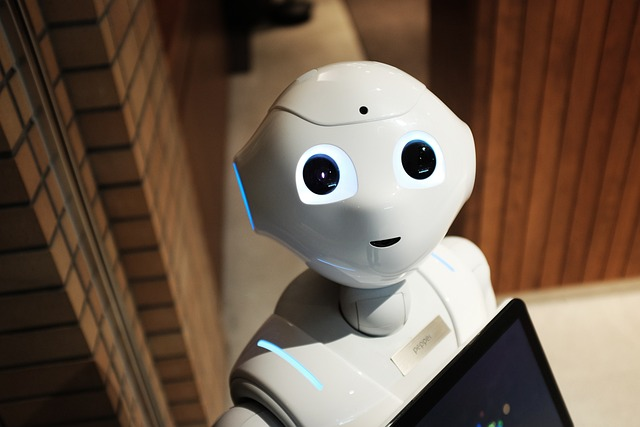
Korean robotics companies are developing advanced autonomous systems for industrial, healthcare, and service applications. These robots leverage computer vision, natural language processing, and reinforcement learning to perform complex tasks in dynamic environments. From warehouse automation to surgical assistance, Korean robotics innovations are expanding rapidly across diverse sectors.
Digital Health Technologies
Digital health represents 16% of Korean tech innovations showcased at CES 2026, making it the second-largest category after AI. Korean companies are pioneering telemedicine platforms, wearable health monitors, and AI-powered diagnostic tools that improve patient outcomes and reduce healthcare costs. These technologies integrate seamlessly with Korea’s advanced 5G and emerging 6G networks, enabling real-time health monitoring and remote consultations.
Next-Generation Connectivity: 6G Development
While 5G networks continue expanding globally, Korea is already investing heavily in 6G technology development. Expected to launch commercially by 2030, 6G networks will offer speeds up to 50 times faster than 5G, with near-zero latency. Korean telecommunications giants are collaborating with government research institutions to develop core 6G technologies, including terahertz communications and AI-native network architectures.
XR Technologies and Immersive Experiences
Extended reality (XR) technologies, including virtual reality (VR) and augmented reality (AR), are becoming mainstream in Korea’s tech landscape. Korean tech trends 2026 show widespread adoption of XR in education, entertainment, retail, and industrial training applications. High-resolution displays, improved haptic feedback, and reduced device weight are making XR experiences more comfortable and accessible to broader audiences.
Sustainable Technology and Green Innovation
Sustainability is a core pillar of Korean tech trends 2026, with 10% of CES exhibitors focusing on energy-efficient solutions and green technologies. Korean companies are developing advanced battery technologies, solar energy systems, and carbon capture solutions that address climate change while creating new economic opportunities.
Electric Vehicle Technologies
Korea’s automotive industry is rapidly transitioning to electric vehicles (EVs), with major manufacturers investing billions in EV platforms, battery technologies, and charging infrastructure. Korean battery manufacturers supply cells to global automakers, while domestic EV sales continue growing rapidly. Advanced driver assistance systems (ADAS) and autonomous driving technologies are becoming standard features in Korean EVs, showcasing the integration of multiple technology trends.
Looking Ahead: Korea’s Innovation Future
Korean tech trends 2026 demonstrate a nation confidently transitioning from fast follower to innovation leader. The coordinated effort between government policy support, private sector investment, and startup ecosystem development creates a powerful innovation engine that will drive Korea’s competitiveness for years to come.
As AI, robotics, and sustainable technologies continue evolving, Korea’s strategic investments position the nation as an essential player in global technology markets. The shift toward B2B solutions, industrial automation, and deep-tech innovations represents not just technological progress but a fundamental transformation of Korea’s innovation identity.
What Korean tech trends are you most excited about? Share your thoughts in the comments below, and subscribe to our newsletter for more insights into Korea’s innovation landscape.